“Are you familiar with the metaphor crabs in a bucket? It’s when one crab tries to climb out and is pulled back down by the others. I’ve seen incels talk about incel culture in much the same way,” says Jan Christoffer Andersen.
He is a researcher at the Norwegian Centre for Violence and Traumatic Stress Studies, and recently defended his thesis at the University of Oslo. His doctorate focused on the incel subculture – online communities of young men living in involuntary celibacy.
“Incels have developed their own subculture. Their own worldview, with theories to explain why they perceive the world as unfair.”
According to Andersen, incels place themselves at the bottom of what they refer to as a sexual or romantic hierarchy, a so-called ‘attractiveness pyramid’.
“Incels can be very dogmatic. Many of them take it to the extreme,” says Andersen, who interviewed 14 incels in connection with his thesis.
Jan Christoffer Andersen defended his thesis at the University of Oslo in summer 2025. In his doctoral thesis ‘Boundaries of Online Misogyny: Identities and Narratives in the Incel Subculture’, he examines how online incel communities function as a subculture with its own norms and status hierarchies.
The study is based, among other things, on in-depth interviews with 14 men who identify as incels or have been part of the subculture. The participants were recruited via various online forums.
The thesis shows that the incel subculture has its own social architecture, where, among other things, suffering confers status and recognition.
It also shows how strict norms related to body and appearance can be harmful to those participating in the communities.
“Logically consistent”
To outsiders, incel forums may appear chaotic and hateful. Andersen, however, argues that there is a social architecture beneath the surface.
“They have their own norms and clear rules for how they should express themselves.”
The most important principle is this:
“The more miserable you are, the more recognition and status you have in the community. It signals how ‘true’ an incel you are.”
According to Andersen, many incels have an almost mathematical approach to the world.
“Everything is categorised. Everything is labelled. At a glance, the forums appear to only be about hate. But there is an internal logic that the participants find consistent.”
Interviewed 14 incels
In one of his studies, Andersen interviewed 14 men who either identified as incels or were closely linked to the community. It is unusual for incels to take part in research, according to the researcher.
“They are often demonised in the public eye, largely due to misogynistic attitudes and hate speech.
And often with good reason. There is a lot of misogyny in these communities, often combined with racism, homophobia and transphobia.”
The informants were recruited via various online forums. The interviews were long, two hours on average, with the longest lasting three and a half hours.
Four of the informants opted to have their cameras turned off, and one used a voice modulator to further conceal his identity.
Proud to be incels?
One of the informants did not call himself an incel, but a ‘volcel’, i.e. a voluntary celibate. Andersen explains that there are some men who, technically, could have sex or relationships but choose to abstain, and are therefore not considered ‘true’ incels.
“Many seem proud to be incels?”
“Yes and no,” Andersen replies.
He describes three main strategies for choosing to live as an incel.
“For example, economic collapse, pandemics or war. They want other people to suffer as much as they do – especially women.”
The first is about downplaying the difference between themselves and sexually attractive men, often referred to as Chads.
“The men in this group try to appear normal and rational. The aim is to distance themselves from the stereotype of incels as potential mass murderers or losers living in their parents' basements.”
The second strategy takes the opposite approach.
“They embrace the incel identity and exaggerate the differences between themselves and sexually successful men. They embrace their otherness by adopting a stereotype, portraying themselves as a loser or an outcast. Often through self-loathing and nihilistic and fatalistic narratives.”
The third group is the most extreme, according to Andersen.
“They exaggerate the differences, but also try to undermine both ‘normal’ men and other incels in the community. They despise non-incels, belittle other men for their hyper-masculinity and mock those perceived as feminine.”
Red pill, blue pill and black pill
According to Andersen, many men in the community are proud of having ‘seen the truth’. They use the metaphors blue pill and red pill to signify that they have gained a deeper insight.
“The blue pill means living in blissful ignorance. The red pill is about seeing how the world ‘really’ works.”
In a dating context, this entails, according to incels who claim to have taken the red pill, confronting what they perceive as an uncomfortable truth: that women are seen as being selective and primarily guided by men’s appearance, status and wealth.
“Within this line of thinking, it is possible to compensate to some extent. Dress better. Work out. Earn more money.”
However, for incels, the black pill is often the most revered.
“It represents a more fatalistic perspective. Attractiveness is understood as genetically determined. Women are assumed to choose partners almost exclusively based on appearance.”
He adds that the fatalistic perspective often manifests as schadenfreude, and that many incels hope that society as a whole will succumb to crises and disasters.
Self-destructive behaviour and cohesion
“Isn’t it ironic that a community that sees itself as losers in the dating market simultaneously reinforces the importance of attractiveness?”
“Yes, it's very counterproductive,” Andersen replies.
He explains that, above all, they are driven by loneliness.
“Many of the men I spoke to have few friends in real life and weak social networks.
This makes a sense of belonging and community very important to them.
In incel communities, they meet others who understand their pain, to put it simply.”
From jokes to serious body-image pressure
“For some, it's also about humour and pushing boundaries. About crude humour and provocation.”
According to the researcher, belonging to a community that is strongly condemned can also be perceived as attractive.
“When something is demonised in the mainstream media and by the authorities, it can be extra appealing.
This is reinforced by algorithms,” says Andersen.
“They promote unrealistic body-image ideals to adolescent boys, especially on platforms like TikTok.”
“The whole point of incel culture is, essentially, to obtain sex or a partner."
And another incel term comes into play here – looksmaxxing: Several of the young men post photos of themselves on the forums. Then they ask other users to comment and make suggestions on how they can improve their bodies.
Andersen argues that this creates unprecedented body-image pressure among boys.
He believes this is problematic for several reasons, pointing out that many incels spread pseudo-scientific information that in some cases can be harmful to health.
Some of the recommended interventions are extreme, he says. He refers to concepts such as hunter eyes, which denotes dominant, masculine eyes, and involves analysing the distance between the eyes, facial structure and jawline.
“Height is also extremely important. Some people even promote surgical procedures to increase height.”
And then there’s bonesmashing.
This means hitting the jaw to try and modify facial structure to resemble a ‘Chad’, the archetypal male at the apex of the masculinity hierarchy.
Got a girlfriend, but no one congratulated him
One of the informants Andersen interviewed had been deeply involved in the incel culture, but ended up getting a girlfriend.
“Interestingly, he was then kicked out – banned – from an online forum with other incels. He was actually a little upset that no one congratulated him or anything.”
Andersen highlights the irony of this.
“The whole point of incel culture is, essentially, to obtain sex or a partner. But as soon as you actually get it, you are seen as a traitor.”
“For some, this means that the struggle to maintain truecel status – to be a ‘true’ incel – makes it very difficult to get out,” he concludes.
Researching anti-feminist male communities
Martta Karoliina Ojala is a research fellow at the Faculty of Social Sciences at Nord University. She is writing her doctorate on anti-feminist men’s rights activists on Reddit, an internet forum often frequented by incels.
In her research, she examines how men’s rights activists understand the position of men in contemporary society. She looks at how they understand the relationship between men and women and portray themselves as victims of a feminist society.
She emphasises that men’s rights activists and incels are not the same thing.
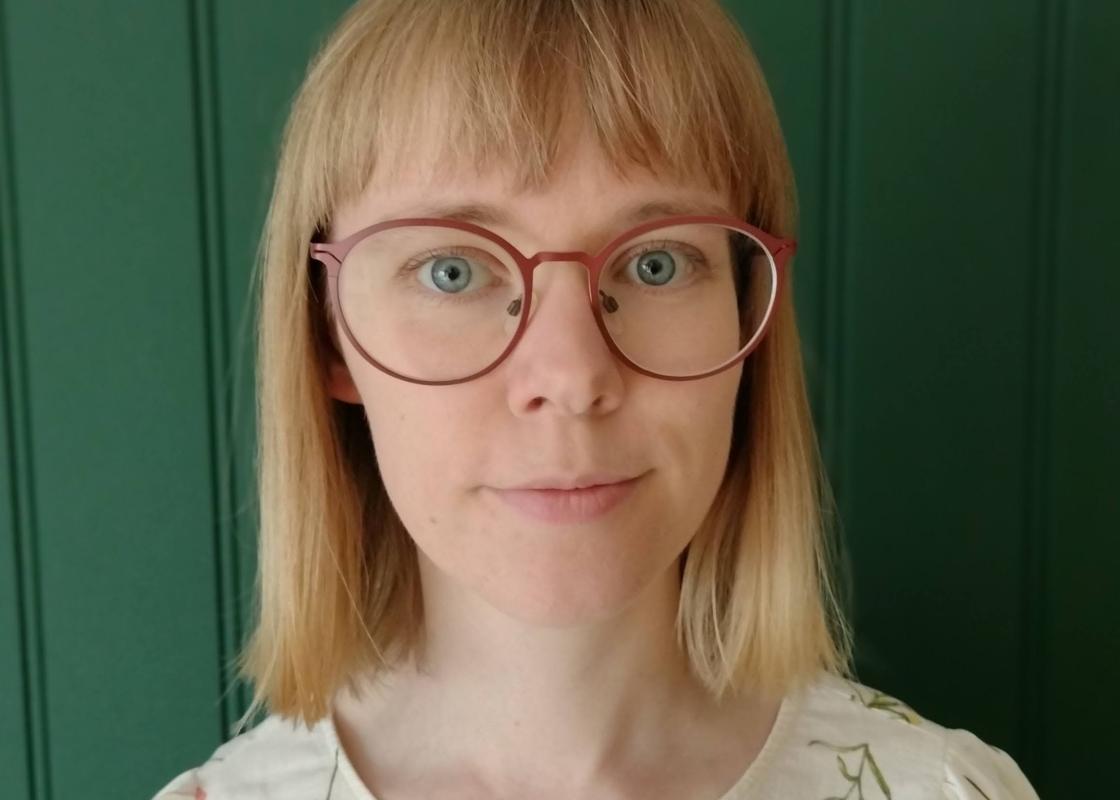
– They overlap, but they are also different. The biggest difference is that incels are very interested in sex, and often have a rather hopeless outlook on life. They think there is little they can do to change society or their own situation.
Men’s rights activists are more political
While incels have often ‘given up’, men’s rights activists are more political.
“They are more likely to think that society is capable of change. The underlying ideology – misogyny and anti-feminism – may be similar. However, men’s rights activists are more confident that society can be changed through political means.”
“How do you understand the incel phenomenon?”
“I think it's about men feeling marginalised from society in different ways. They often link this to not having relationships with women, sexual experiences or romantic involvement,” says Ojala.
However, she rejects the popular narrative that sex is at the heart of their problems.
“In reality, it doesn’t have that much to do with sex. It’s more about a sense of feeling excluded from society,” says Ojala.
“For young men, it may, for example, stem from being bullied at school.”
Translated by Totaltekst.